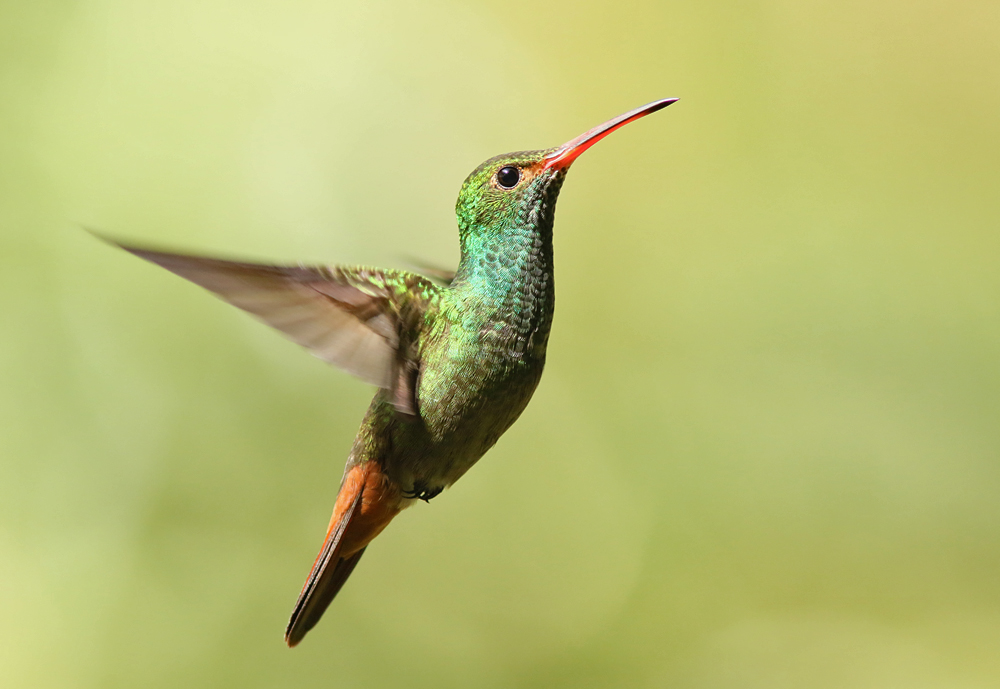
In the afternoon of our full day in the Rancho area Vernon took us out in the bus stopping at various points picking up different target birds, White-throated Flycatcher in a grassy drainage, and a walk down a dirt road paralleling a small canyon.
A Masked Tityra teed up quickly.
We'd walked about halfway down the road when Vernon stopped abruptly and set the scope up. A sunbittern was standing on a large branch. It had a baby that disappeared quickly and invisibly into the parent's breast feathers.
The bird settled down providing beautiful walkaway scope views. Sunbittern was easily in my top 5 most wanted for the trip. Unfortunately another bird possible here that we'd missed at Tapanti also in that category, Lancebill hummingbird, proved to be a no-show.
We walked further down encountering a Blue morpho
I didn't wait to try to photograph the blue wingflash of this enormous butterfly to catch back up with Vernon who soon spotted another Sunbittern, this one foraging slowly at stream's edge for tiny aquatic life.
A couple of us lagged behind the group and were rewarded by the bird taking flight.
Unfortunately in the dark of the canyon I was shooting probably 1/100th or 160th of second or so, way too slow to freeze a bird in flight.
A couple of Bay Wrens played hide and seek in the thick brush that was undeterred by the rocky edges of the canyon
A last look at the very picturesque start of the trail
Wednesday, March 11, 2015
Monday, March 9, 2015
Black-crested Coquette
The most common small hummingbird at Rancho was the Black-crested Coquette. They didn't come into the feeders, but one or two were almost invariably present in the flowering Verbena (it's really too bad this stuff doesn't grow up here; Costa Rican hummingbirds love it).
I only saw one or two males however; I would have liked better pics of their pin-feather crests
We had to mostly make do with females and immatures.
I only saw one or two males however; I would have liked better pics of their pin-feather crests
We had to mostly make do with females and immatures.
Costa Rica is at the southern end of this small hummer's range, starting in southern Mexico. It's one of the most widely distributed coquettes.
Saturday, March 7, 2015
Tanagers of Silent Mountain
Our trip focused on mid-elevations, and tanagers have their greatest diversity at this level. We drove out from Rancho to a roadside up Silent Mountain mainly with these birds in mind.
The first flock of dark birds worked through very rapidly, before half the group was even out of the bus. Given that there were probably 20-30 of them my first thought was that they were grassquits and the Tawny-crested Tanagers were past before anyone had a decent look. An Emerald and a Black-and-yellow trailed behind them though. The Black-and-yellow was quite reminiscent of a Prothonotary Warbler
There aren't many birds more tropical in appearance than an Emerald Tanager. It's fairly remarkable how closely these gaudy birds mimic the foliage colors.
We worked our way up the road finding elaenias, Cinnamon Becard, and a Green Kingfisher
About halfway up we got back into some activity in the shady ravine over the creek; the Tawny-crests were back. They worked through just as fast as they did the first time.
Some of the group had decent looks at a male White-ruffed Manakin that I saw only in flight and a White-shouldered Tanager teed up and then flew past showing his white shoulders well. Activity slowed in the upper part of the trail but on the way back down a Summer Tanager and then a small group of Black-and-Yellows re-appeared.
Some classification systems include the Euphonias as tanagers as well. Tawny-crested is fairly common at mid-elevations
The orangey-cap make them an easier ID than the more generic euphonias such as this Yellow-throated.
We had distant views of Golden-hooded Tanager as well as much closer ones of this Tropical Parula (warbler).
Bay-headed Tanagers also put in appearances, definitely my most prolonged view of this unique aqua, green, and brick colored bird.
We were mere yards from the van when Vernon spotted the final target of the walk, Speckled Tanager
Finally one of a few Barred Hawks that were soaring on thermals over the valley.
The first flock of dark birds worked through very rapidly, before half the group was even out of the bus. Given that there were probably 20-30 of them my first thought was that they were grassquits and the Tawny-crested Tanagers were past before anyone had a decent look. An Emerald and a Black-and-yellow trailed behind them though. The Black-and-yellow was quite reminiscent of a Prothonotary Warbler
There aren't many birds more tropical in appearance than an Emerald Tanager. It's fairly remarkable how closely these gaudy birds mimic the foliage colors.
We worked our way up the road finding elaenias, Cinnamon Becard, and a Green Kingfisher
About halfway up we got back into some activity in the shady ravine over the creek; the Tawny-crests were back. They worked through just as fast as they did the first time.
Some of the group had decent looks at a male White-ruffed Manakin that I saw only in flight and a White-shouldered Tanager teed up and then flew past showing his white shoulders well. Activity slowed in the upper part of the trail but on the way back down a Summer Tanager and then a small group of Black-and-Yellows re-appeared.
Some classification systems include the Euphonias as tanagers as well. Tawny-crested is fairly common at mid-elevations
The orangey-cap make them an easier ID than the more generic euphonias such as this Yellow-throated.
We had distant views of Golden-hooded Tanager as well as much closer ones of this Tropical Parula (warbler).
Bay-headed Tanagers also put in appearances, definitely my most prolonged view of this unique aqua, green, and brick colored bird.
We were mere yards from the van when Vernon spotted the final target of the walk, Speckled Tanager
Finally one of a few Barred Hawks that were soaring on thermals over the valley.
Thursday, March 5, 2015
Mangos are Brilliant
Back-to-back hummingbird posts. What can I say, they're photogenic.
Green-crowned Brilliant was one of the less common hummers at Rancho. I only saw it a couple times, but this immature male perched in nice light at one point.
Their small oval head, short bill, and long tail give them somewhat odd proportions.
Green-breasted Mangos are another mostly green hummingbird, though shaped very differently: short tailed and long (dark) billed. I didn't see many adult males.
Females and immatures on the other hand were quite common.
I can't think of many birds whose darkest coloring runs down the midline of the underside.
Green-crowned Brilliant was one of the less common hummers at Rancho. I only saw it a couple times, but this immature male perched in nice light at one point.
Their small oval head, short bill, and long tail give them somewhat odd proportions.
Green-breasted Mangos are another mostly green hummingbird, though shaped very differently: short tailed and long (dark) billed. I didn't see many adult males.
Females and immatures on the other hand were quite common.
I can't think of many birds whose darkest coloring runs down the midline of the underside.
Tuesday, March 3, 2015
the Rancho intro hummingbirds
Rancho Naturalista is famous for its hummingbird feeders for good reason. I think our group saw about a dozen species.
White-necked Jacobin is probably the most common.
In undergrad I would sometimes check the Mexican Peterson out of the library, the Jacobin was in the lower righthand corner of one of the hummingbird plates, one of the showiest birds in the book. While I've seen the jacobin a few times before, this was certainly the closest. Somehow I didn't manage a sharp photo of one showing the white collar on the back of the neck, most obvious in flight.
The female and young males are somewhat duller, though the scaly underparts aren't shown by many hummers.
The other hummingbird that on each trip confuses me is Rufous-tailed. It's the most common Costa Rican hummingbird in most of the human habited areas and is easy to ignore. This is the typical look of it.
However, when it hits the light it can look a lot brighter and start a person searching for more exciting birds it might be, rather than the more familiar bird they haven't studied as closely as they should.
Even having to resolved to study this bird early in the trip it still took a little getting used to in some lights. One more look at the more typical view (of a fairly dully billed bird.)
White-necked Jacobin is probably the most common.
In undergrad I would sometimes check the Mexican Peterson out of the library, the Jacobin was in the lower righthand corner of one of the hummingbird plates, one of the showiest birds in the book. While I've seen the jacobin a few times before, this was certainly the closest. Somehow I didn't manage a sharp photo of one showing the white collar on the back of the neck, most obvious in flight.
The female and young males are somewhat duller, though the scaly underparts aren't shown by many hummers.
The other hummingbird that on each trip confuses me is Rufous-tailed. It's the most common Costa Rican hummingbird in most of the human habited areas and is easy to ignore. This is the typical look of it.
However, when it hits the light it can look a lot brighter and start a person searching for more exciting birds it might be, rather than the more familiar bird they haven't studied as closely as they should.
At some angles the green just lights up.
Even having to resolved to study this bird early in the trip it still took a little getting used to in some lights. One more look at the more typical view (of a fairly dully billed bird.)
Monday, March 2, 2015
Birding the Bug Lites
Our final stop in the week's trip was a couple days at Rancho Naturalista. We started our first morning well before dawn with a couple hours (that went remarkably fast) birding the bug lights. The bug lights were some lights that shined upon a bed sheet hung up under a pavilion designed to attract moths. Some of the birds of the forest interior will leave their dark haunts to come out into the open and hunt the insects. Vernon's flashlight made them identifiable.
Two woodcreepers started the show. This is Plain-brown Woodcreeper. The dark malar is probably their most distinctive mark.
While I'd seen Plain-brown once before, Spotted Woodcreeper was new. It was larger than I expected and somewhat shier than its cousin.
I'd seen Buff-throated Foliage-gleaner once before, but these were definitely my best pics of one even if there's definitely still room for improvement.
This isn't the first time I've seen Golden-crowned Warbler with flashlights (we'd birded some street lights along the main path in Arenal 2 years ago).
It'd be fun to try this strategy in North America. You don't usually see Kentuckies this well.
Given that insects were the quarry it shouldn't be surprising that some flycatchers were represented, first Dusky-capped,
the ever excitable Bright-rumped Attila,
and the very local Tawny-chested Flycatcher, a bird seen perhaps more easily at Rancho than anywhere else in the world....
We heard White-breasted Wood-wren a few times on the trip. Our best views were here though.
Finally Red-throated Ant-tanager, a bird that was actually fairly common in the forest at Rancho,
and Orange-billed Sparrow, another underbrush skulker.
Two woodcreepers started the show. This is Plain-brown Woodcreeper. The dark malar is probably their most distinctive mark.
While I'd seen Plain-brown once before, Spotted Woodcreeper was new. It was larger than I expected and somewhat shier than its cousin.
I'd seen Buff-throated Foliage-gleaner once before, but these were definitely my best pics of one even if there's definitely still room for improvement.
This isn't the first time I've seen Golden-crowned Warbler with flashlights (we'd birded some street lights along the main path in Arenal 2 years ago).
It'd be fun to try this strategy in North America. You don't usually see Kentuckies this well.
Given that insects were the quarry it shouldn't be surprising that some flycatchers were represented, first Dusky-capped,
the ever excitable Bright-rumped Attila,
and the very local Tawny-chested Flycatcher, a bird seen perhaps more easily at Rancho than anywhere else in the world....
Finally Red-throated Ant-tanager, a bird that was actually fairly common in the forest at Rancho,
and Orange-billed Sparrow, another underbrush skulker.
Subscribe to:
Posts (Atom)